Which Baby Clothing Brands Are Built to Last?
Last Updated: November 14, 2026
Quick Summary
The most durable baby clothing brands are judged by how their pieces handle frequent washing, not by label alone. Look for tightly knit cotton interlock, reinforced necklines and flat seams, plus taped seams and ripstop nylon for outdoor wear. Buy one size up in knits to allow for shrinkage.
- Cotton interlock and cotton rib knits generally hold their shape better through repeated washing.
- Bamboo blends can pill and stretch at knees and seats, especially when tumble dried.
- Cold washing and line drying reduce shrinkage, pilling and damage to elastic and taped seams.
- Cost per wear equals purchase price divided by estimated number of wears, so higher prices can still be good value.
- Inspect secondhand pieces at shoulders, underarms and crotch seams, and check elastic at the neck and wrists.
Table of Contents
- Best Baby Clothes for Frequent Washing
- Durable Baby Clothing Fabrics Compared
- Top Durable Baby Clothing Brands and Picks
- How to Check Secondhand Baby Clothes for Wear
- High-Quality Baby Clothes and Cost Per Wear
- Where to Start With Your Next Pre-Loved Haul
- Frequently Asked Questions
Durable baby clothes hold up better through frequent washing, drying and hand-me-down use. This guide walks through the features that tend to last and explains how we judged them. This guide walks through the features that tend to last, and explains how to judge them.
Durability is not a single number: a cotton romper might survive a hundred washes while the stitching on a cheap fleece jacket comes apart after twenty. So we looked at what actually fails, seams, fabric weight, colourfastness, shape retention and how a garment handles repeated machine washing.
Sailor Jack has been operating since 2014, and the owner says the business knows quality and knows what kids want to wear.
Best Baby Clothes for Frequent Washing
Frequent washing is the real test for baby clothes. Newborn and infant pieces can go through several changes a day, so garments that hold their shape after many cycles are the ones worth buying, new or pre-loved.
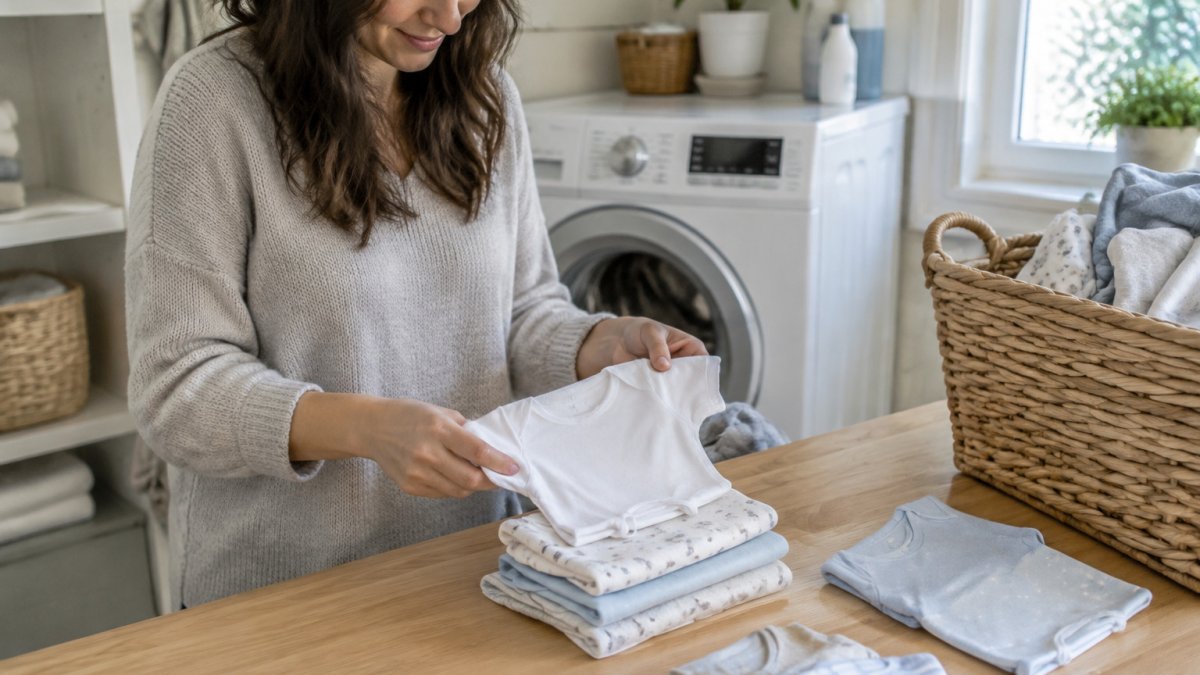
Look for tags that say machine washable and check the care label before you buy. Cotton and cotton-blend knits tend to hold up well, while thin synthetic blends can pill or lose elasticity. A romper or onesie with reinforced neck openings and flat seams is less likely to tear when you pull it over a wriggling baby's head.
Shrinkage is another common problem. A piece that fits perfectly after the first wash can end up too snug after a few more. Buying one size up in a quality knit usually gives the garment room to settle without sacrificing fit.
Durable Baby Clothing Fabrics Compared
Fabric decides a lot about how long a garment lasts, but the useful comparison is not "natural versus synthetic", it is how a specific knit, weave and fiber blend behaves after repeated washing and drying.
| Fabric | Typical weight / construction | Shrinkage after repeated hot washes | Pilling risk | Shape retention | Best use |
|---|---|---|---|---|---|
| Combed cotton interlock | Mid-weight, tight knit | Low to moderate (2-5% common) | Low | Good | Bodysuits, sleepers, everyday knits |
| Cotton jersey (lightweight) | Light, open knit | Moderate | Moderate | Fair | Summer rompers, layering |
| Organic cotton rib knit | Mid-weight, stretchy | Moderate | Low to moderate | Good at neck and cuffs | Cuffs, neckbands, grow-with-me pieces |
| Bamboo viscose or bamboo-cotton blend | Light to mid, very soft hand | Moderate to high if tumble dried | Moderate to high in loose knits | Fair, can stretch out at knees and seats | Soft basics for sensitive skin |
| Cotton-polyester fleece | Mid to heavy, brushed back | Low | High on exposed surfaces | Good | Jackets, cold-weather layers |
| Recycled polyester blend | Light, often in socks and accessories | Very low | Low | Excellent | Socks, outer layers, stretch panels |
| Ripstop nylon | Light, grid-reinforced weave | Negligible | None | Excellent | Rain suits, splash pants |
A few mechanisms explain most of the differences. Shrinkage generally comes from fiber relaxation and cotton's tendency to contract when heated. Pilling happens when short fibers work loose and tangle into balls, which is why brushed fleece and loose bamboo blends pill sooner than combed, long-staple cotton.
Fabric weight matters as much as fiber. Heavier knits generally hold their structure better through many wash cycles than very light jerseys.
Care changes the outcome. Washing cold and line-drying generally reduces shrinkage and pilling compared with hot washing and hot drying, and it helps protect elastic and taped seams.
Watch out: a "100% organic cotton" label tells you about growing methods, not about knit density or seam quality, an organic jersey can still pill and stretch faster than a tightly knit conventional interlock.
For outdoor pieces the calculus is different. A ripstop nylon or rugged polyester shell with taped seams resists tearing and keeps wind and rain out, which matters for a rain suit dragged through mud weekly.
Top Durable Baby Clothing Brands and Picks
The pieces below are baby and toddler items from Sailor Jack's current stock, with prices in Canadian dollars.
Tuffo Muddy Buddy and Rain Pants for Outdoor Wear
The Tuffo Muddy Buddy is a one-piece waterproof rain suit with dual front zippers for quick changes, sealed seams, an elasticized hood with a brim to shed water, and elasticized wrist and ankle cuffs that fit over mitts and boots. You can view and buy the Tuffo Muddy Buddy in the size your child needs. The fabric is a rugged durable polyester, and it includes a waterproof bag for travel. It is listed in sizes from 12 months to 5T and costs $39.99 CAD.
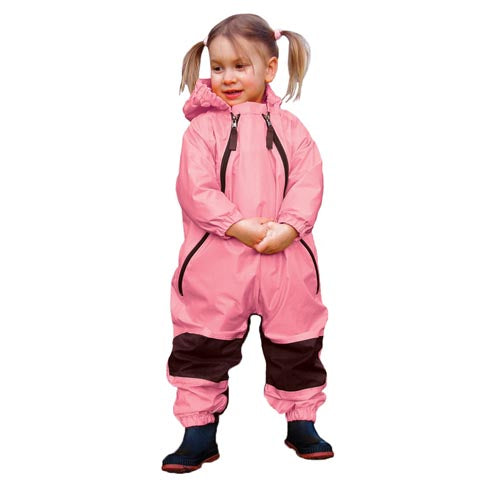
A full suit is warm, so it suits cold, wet days better than mild ones. Machine wash cold and hang to dry.
The Tuffo Rain Pants are a lighter option at $20.00 CAD. They use a ripstop nylon that is waterproof, windproof and breathable, with fully taped seams and reflective material for visibility. They pair well with a rain jacket and are sized from 2T to 12. You can view and buy the Tuffo Rain Pants here. Tumble dry low or line dry to protect the taping.
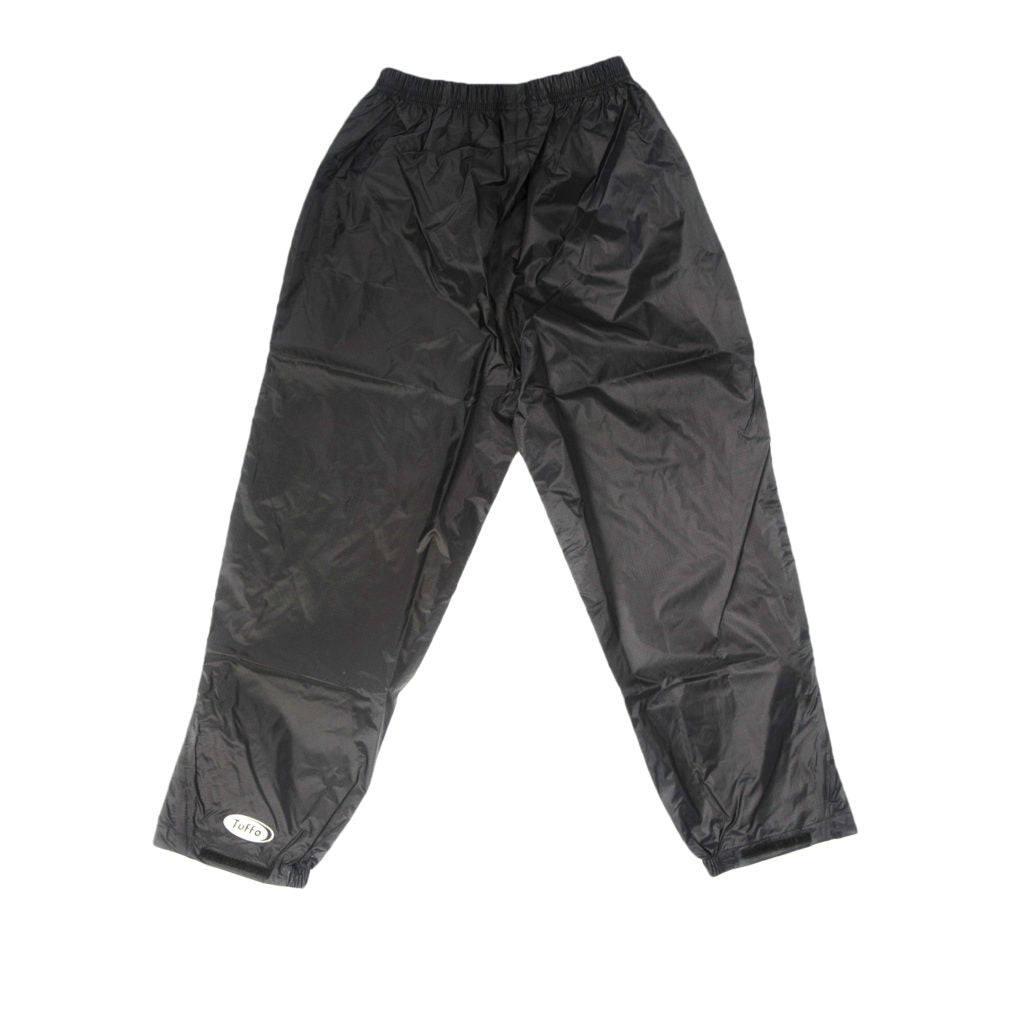
Best for: parents of toddlers who spend long stretches outdoors in wet weather. Skip if: your child only needs a light layer for occasional drizzle.
Mebie Baby Everyday Basics at Sailor Jack
For everyday wear, Mebie's basics from Sailor Jack cover the daily wardrobe. The bamboo tank romper in 12-18 months is $36.99 CAD and is one of the more premium pieces we carry. The Mebie Baby Tank Onesie in 6-12 months and the Daisy Bamboo Onesie in 3-6 months are $9.99 CAD each, and the knit romper in 0-3 months is $19.99 CAD. Jogging pants and leggings in 3-6 months are $14.99 CAD each.
These are everyday pieces. Bamboo blends are generally soft, though they can lose some of their feel after many washes.
Best for: families looking for everyday layers at accessible prices. Skip if: you need heavy-duty outerwear for cold weather.
How to Check Secondhand Baby Clothes for Wear
Pre-loved baby clothes can offer good value, but inspect them before you buy. Start with the seams: pull gently along the stitching at the shoulders, underarms and crotch, and look for loose threads or puckering. Check the elastic at the neck, wrists and waistband, since stretched or perished elastic is hard to fix.
Next, look at the fabric. For a more detailed inspection guide covering safety checks beyond wear, see how to check used baby clothes. Hold the piece up to the light and look for thin patches, holes or faded print. Pilling, the small balls of fibre that form on knits, shows the garment has been worn hard. Check snaps and zippers too, making sure they close smoothly and no teeth are missing.
Finally, wash the item on a gentle cycle before you wear it, and check it again afterward. Some shrinkage or fading will show up in the wash, which is why inspecting and washing a piece before first use is a sensible habit.
High-Quality Baby Clothes and Cost Per Wear
Price alone does not tell you whether a garment is a good buy. A higher-priced piece that lasts through several children may cost less per wear than a lower-priced piece that wears out quickly.
The formula is simple: cost per wear = purchase price ÷ estimated number of wears. The hard part is the estimate, so use realistic ranges rather than best-case numbers. A newborn goes through roughly 6-10 outfit changes a day, but most families rotate through 10-15 pieces, so one bodysuit might be worn 2-3 times a week.
Here is how the arithmetic plays out across a few common scenarios, using round numbers you can substitute with your own:
- Everyday bodysuits. A $9.99 onesie worn twice a week for four months is about 34 wears, or roughly $0.29 per wear.
- Bamboo romper. A $36.99 romper worn once a week for six months is about 26 wears, or about $1.42 per wear.
- Rain suit. A $39.99 one-piece worn three times a week through two 12-week wet seasons is about 72 wears, or roughly $0.56 per wear.
The lesson is not that expensive always wins. Lifespan and rotation matter more than sticker price, and hand-me-down potential can lower the cost per wear of a well-made piece.
You can lower the number further by buying pre-loved. At Sailor Jack, consignors earn 50-60% of each item's sale price, and you can take store credit or cash instead. Learn how to earn store credit for your clothes by trading in your own pieces. Buying secondhand and passing clothes on again keeps them in circulation and can stretch a family budget.
Cost-per-wear estimates depend on your rotation assumption, so run the numbers for how your family actually dresses your child before dismissing a higher-priced piece.
Cost per wear for example baby clothing scenarios
Where to Start With Your Next Pre-Loved Haul
If you are new to buying pre-loved, start with pieces you wear every day: onesies, rompers and leggings, where durability and fit matter most. Inspect each item using the checks above, and buy one size up in knits to allow for shrinkage.
Sailor Jack adds hundreds of new items every day, so the stock changes often. If you have baby clothes of your own to sell, see how to consign with the store. Browse the baby and toddler range, then choose the outdoor pieces only when your child needs them. Sailor Jack is a women-powered shop that has served the Vic West community for over 20 years, and we are happy to help you find what fits your child and your budget.
Stretch your budget further with pieces built to last. Get started with Sailor Jack and find quality, pre-loved baby clothes that keep working through every wash.
Frequently Asked Questions
What baby clothing brands hold up best to frequent washing?
Durability with frequent washing depends more on the fabric and construction than on the label alone. Look for tightly knit cotton or bamboo blends, reinforced seams and care labels that allow machine washing in cold water. At Sailor Jack, we curate pre-loved pieces from brands from around the world, so you can browse a range of pre-loved pieces before you buy. Check the stitching and fabric weight on each item rather than relying on brand reputation alone.
What fabrics are most durable for baby clothes?
Cotton jersey with a medium weight, bamboo blends and polyester-reinforced knits tend to resist pilling and shape loss through repeated washing. We love natural fabrics at Sailor Jack, and natural fibres like cotton and bamboo are a common choice for sensitive skin, though they can shrink or fade without gentle care. Fabric weight matters: heavier knits usually last longer, while very thin jerseys can wear through at the knees and elbows sooner.
What should you check when buying secondhand baby clothes?
Inspect seams for loose threads, check snaps and zippers for smooth operation, and look for pilling, thinning fabric or colour fading in the same place on each piece. Sailor Jack has been operating since 2014, and the owner says the business knows quality and knows what kids want, which helps when choosing pieces in sizes NB to 16. Give each garment a close look under good light before you pay, and avoid anything with stains or stretched necklines.
Is it worth buying higher-quality baby clothes?
Higher-quality baby clothes are worth it when they last through several children or many washes, because the cost per wear drops as the garment gets used. Buying pre-loved can keep the cost of a quality piece lower, so compare each item's price against how many times you expect to wear it. Compare the price of an item against how many times you expect to wear it before it is outgrown or worn out.
